Why Is Ordinary Plywood a Popular Global Choice?

Why Is Ordinary Plywood a Popular Global Choice?

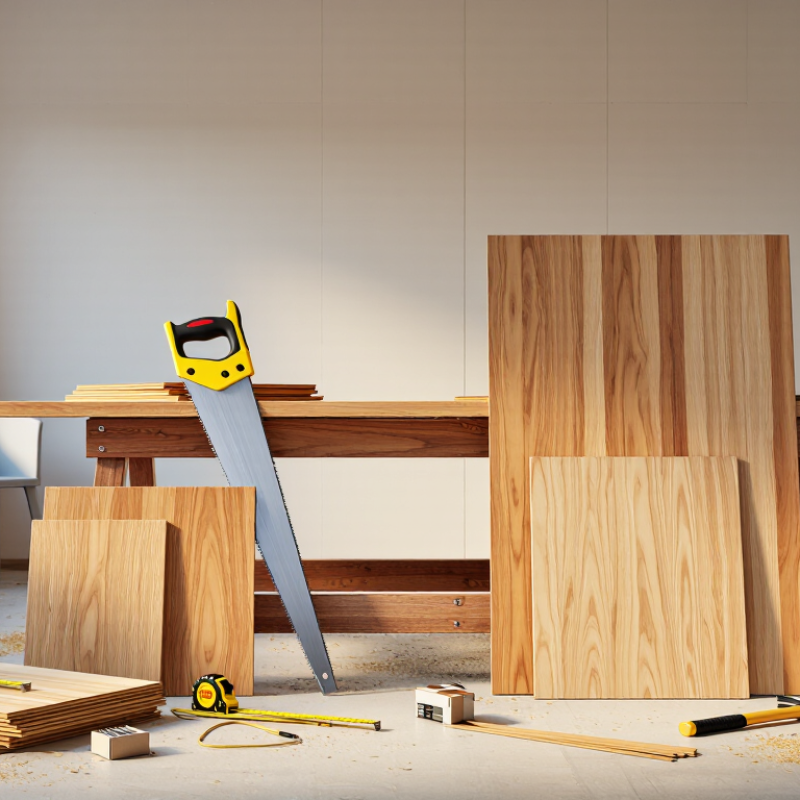
Ordinary Plywood remains popular because it combines availability, workable strength, and manageable cost. A standard sheet can be cut on a small workshop saw, carried by one person, and fixed with common fasteners. It appears in furniture backs, wall linings, packaging, temporary structures, and interior construction. That practical range matters in both mature and developing markets.

The Food and Agriculture Organization’s Global Forest Products Facts and Figures 2023 identifies wood-based panels as a major global product group with substantial production and trade. Grand View Research estimates that the global plywood market reached about USD 51.6 billion in 2023. Market estimates differ, however, because some reports include decorative panels, while others focus on construction-grade plywood. That limitation deserves attention.

Alex C. Wiedenhoeft, a wood anatomist at the USDA Forest Products Laboratory, has emphasized that wood is a “biological material.” The statement explains an important reality: plywood is engineered, but it is not perfectly uniform. Veneer species, adhesive quality, pressing conditions, moisture exposure, and grading can change performance. A low-cost panel may look acceptable in a dry room, then swell near an unsealed sink. Small details matter.

Its popularity is therefore not based on strength alone. Ordinary Plywood is familiar, repairable, widely distributed, and adaptable to local building practices. It also supports efficient use of thinner wood layers. Still, buyers should verify emissions class, structural grade, thickness tolerance, and moisture resistance. “Universal” is too strong a word. Plywood is popular globally, but the right panel depends on the job.
Why Is Ordinary Plywood a Popular Global Choice?

What Ordinary Plywood Is and How It Is Made

Why Is Ordinary Plywood a Popular Global Choice?

Ordinary plywood is a layered wood panel made from thin veneers. Manufacturers peel or slice logs into sheets, then dry them carefully. Each veneer is placed with its grain crossing the next layer. This cross-grain structure improves strength and reduces movement. Most panels contain an odd number of layers, bonded under heat and pressure.

The process sounds simple, but small details matter. Uneven moisture can cause warping. Weak adhesive coverage may create bubbles or delamination. After pressing, workers trim, sand, and inspect each panel. Ordinary plywood is usually designed for general indoor construction, furniture parts, packaging, and temporary site work. It should not be treated as waterproof unless its specification clearly says so. Panel quality can vary. That deserves attention.

Tips: Check thickness with a caliper, not only by sight. Inspect edges for open gaps and loose veneers. Store panels flat, raised from damp floors, and covered with airflow around the stack. Before cutting, mark the face side and test screws on a leftover piece. A smooth surface can still hide internal flaws.

Why Its Layered Structure Provides Reliable Performance

Why Is Ordinary Plywood a Popular Global Choice?

Why Its Layered Structure Provides Reliable Performance

Plywood works because thin wood veneers are arranged in alternating directions. Each layer crosses the next, forming a balanced panel. This structure limits splitting along one grain line. It also spreads loads across a wider surface. The USDA Forest Products Laboratory’s Wood Handbook, General Technical Report FPL-GTR-282, explains that cross-laminated construction improves dimensional stability and strength compared with solid wood of similar size.

On a job site, this difference feels practical. A plywood sheet can support a cabinet side, floor panel, or temporary form without failing suddenly. Its broad face resists bending, while its edges hold fasteners more consistently than many low-density boards. The effect is simple. Layers share the stress.

The material is not flawless. Moisture can still cause swelling, especially at exposed edges. Poor veneer grading or weak bonding can reduce performance. This is where product standards and factory controls matter. ISO 12465 sets requirements for plywood quality and classification. The FAO’s Global Forest Products Facts and Figures 2023 reported global wood-based panel production at roughly 400 million cubic metres, showing the scale of demand for engineered panels. That figure does not prove every sheet is reliable. It does show why consistent manufacturing matters.

I have seen one overlooked detail cause trouble: unsealed edges near wet areas. Layered design helps, but it cannot replace correct installation.

How Ordinary Plywood Balances Cost, Strength, and Availability

Ordinary plywood remains popular because it balances cost, strength, and availability. Its layered veneers spread loads more evenly than solid boards. This helps panels resist splitting during cutting, fastening, and everyday use. Standard thicknesses are easy to find in many local building suppliers. That convenience can reduce delays and transport costs.

The material is not perfect. Lower-cost sheets may contain core gaps, uneven faces, or visible repairs. These flaws can affect edges, screw holding, and final appearance.

A practical buyer should inspect several panels under clear light. Tap the surface gently and check for soft areas. For structural work, confirm the plywood grade, thickness, and moisture rating through technical documentation. Local construction requirements still matter. A cheap panel is expensive when replacement becomes necessary.

Tips:

Keep it dry. Seal exposed edges before installation. Use a fine-tooth blade for cleaner cuts, and support the sheet near the cutting line. For shelves or worktops, reduce unsupported spans with framing or closer supports.

I sometimes choose a stronger sheet than needed, but that is not always efficient. Comparing load requirements with actual panel data prevents unnecessary spending. When appearance matters, plan for sanding, filling, and a suitable finish.

Where Ordinary Plywood Is Commonly Used Around the World

Ordinary plywood is widely used because it fits many local building practices. In North America and Europe, contractors commonly install it as roof decking, wall sheathing, flooring, and concrete formwork. In Asia, it appears in furniture workshops, shop interiors, doors, and low-rise housing. It travels well. According to the FAO’s Global Forest Products Facts and Figures 2023, global wood-based panel production exceeded 400 million cubic metres, reflecting strong demand across construction and interior industries.

Its role changes with regional needs. In tropical markets, plywood is often cut into cabinets, partitions, ceiling panels, and transport packaging. In colder regions, builders value its stable dimensions and easy handling during renovation work. The FAO and UNECE Forest Products Annual Market Review 2023–2024 links panel demand closely with housing activity and repair projects. That matters. A 2.4-metre sheet can cover a large surface quickly, reducing joints and installation time.

Yet “ordinary” does not mean suitable everywhere. Standard plywood may swell when exposed to repeated rain, poor ventilation, or leaking roofs. On several job sites, moisture protection is treated as an afterthought, and that mistake becomes expensive. Product grade, adhesive type, thickness, and edge sealing should match the location. UNECE market data also show that construction cycles strongly affect panel consumption, so demand is not always stable. The practical lesson is simple: plywood works globally, but local climate and workmanship decide its real performance.

Why Is Ordinary Plywood a Popular Global Choice? – Where Ordinary Plywood Is Commonly Used Around the World

Region Common Applications Why It Is Used Typical Performance Requirement Important Limitation
North America Wall, roof and floor sheathing; subfloors; concrete formwork; crates and general repair work. Large panel sizes, efficient installation, good screw-holding ability and a favorable strength-to-weight ratio. Structural panels must meet the applicable building-code requirements for span, thickness, strength and exposure. Interior-grade panels are not suitable for prolonged moisture exposure or exterior structural use.
Europe Roof and wall construction, flooring components, furniture interiors, shopfitting, vehicle flooring and packaging. Stable cross-laminated construction, easy machining and availability in panels designed for different service conditions. Moisture resistance, bonding quality and mechanical performance are commonly selected according to the intended service class. Decorative appearance and surface quality vary considerably between utility, construction and furniture-grade panels.
Asia-Pacific Concrete formwork, residential construction, interior partitions, furniture components, pallets and export packaging. It is widely available, relatively lightweight compared with solid timber and adaptable to both construction and manufacturing. Formwork panels require sufficient stiffness, dimensional stability and resistance to repeated wetting and release-agent use. Panel durability depends strongly on veneer quality, adhesive type, edge sealing and storage conditions.
Latin America Low-rise housing, roof and wall elements, concrete molds, doors, furniture and agricultural or industrial boxes. It offers practical panel coverage, straightforward cutting and fastening, and lower material waste than many narrow solid-wood boards. The selected panel should match local requirements for humidity, biological exposure, loading and fire performance. Unsealed edges can absorb water rapidly, causing swelling, delamination or dimensional change.
Middle East Interior fit-outs, partitions, temporary construction works, doors, furniture backing and transport packaging. Its flat format and ease of fabrication are useful where rapid assembly and customized cutting are important. Storage and installation should account for high temperatures, low humidity, air-conditioning changes and occasional water exposure. Standard utility plywood may require a protective finish when exposed to sunlight, moisture or abrasive use.
Africa Building formwork, roofing and wall components, doors, furniture, market stalls, crates and general maintenance. Plywood can be transported and handled more easily than many heavy solid-wood alternatives while providing broad, usable surfaces. The material should be selected for local humidity, termite or fungal risk, expected loads and available maintenance practices. Untreated panels may have a shorter service life in persistently wet or biologically active environments.
Global Reasons for Popularity Construction, furniture, packaging, transport, temporary structures, interior remodeling and do-it-yourself projects. Veneers are arranged with alternating grain directions, improving panel stability and allowing efficient use of wood in large sheets. Users generally evaluate thickness, ply construction, surface grade, bonding durability, moisture exposure and structural certification. “Ordinary plywood” is not a single universal technical grade; suitability must be confirmed from the panel classification and local regulations.

Note: Applications and performance requirements vary by product classification, veneer species, adhesive system, panel thickness, manufacturing standard and local building regulations.

What Factors Influence Its Selection and Responsible Use

Why Is Ordinary Plywood a Popular Global Choice?

Ordinary plywood remains popular because it balances cost, strength, and availability. Its cross-laminated veneers resist splitting better than many solid boards. Workers can cut it quickly on busy construction sites. It also suits furniture, packaging, wall lining, and temporary structures.

Selection should begin with the environment, not appearance. Interior-grade panels can swell beside a sink or unfinished roof. Exterior applications need suitable bonding and edge protection. Panel thickness, veneer quality, load direction, and surface defects also matter. A small sample test helps reveal delamination, warping, or weak screw holding. That practical step is often skipped.

Responsible use depends on traceable wood and controlled emissions. The FAO Global Forest Resources Assessment 2020 reports that forests cover 31% of global land, while annual net forest loss remained about 4.7 million hectares from 2010 to 2020. This makes legal origin and efficient material use important. The UNECE/FAO Forest Products Annual Market Review 2023–2024 also highlights changing demand and pressure across forest-product markets. Buyers should request species information, product grading, and chain-of-custody records where available. Low-emission panels are preferable in bedrooms, offices, and schools. Ventilation still matters. Responsible use is imperfect. Offcuts may become shelves, spacers, or repair pieces, but not every leftover board has a useful second life. Recognizing that limitation encourages better cutting plans and fewer unnecessary purchases.

Why Is Ordinary Plywood a Popular Global Choice?

Global forest-area trends provide important context for selecting plywood responsibly: material availability must be balanced with legal sourcing, efficient use and appropriate product performance.

Availability

Plywood can be manufactured from several wood species and is available in a wide range of thicknesses, grades and panel sizes.

Fit for purpose

Layered veneers provide directional strength and dimensional stability, but the correct structural, moisture and surface grade must be selected for each application.

Responsible use

Prefer legally traceable wood, credible forest-management certification where required, efficient cutting plans and reuse or recycling at end of service life.

Data source: FAO, Global Forest Resources Assessment 2020. Global forest area values are rounded estimates in billion hectares.

Find Mitten in Michigan

Request Mitten Near You

Have a favorite dispensary that doesn't carry Mitten Extracts yet? Let us know, and we'll work to make sure our premium products are available where you shop.