What Is an Aluminum Perfume Bottle?

What Is an Aluminum Perfume Bottle? It is a fragrance container made primarily from lightweight, corrosion-resistant aluminum. Unlike traditional glass bottles, it feels cool, firm, and slightly industrial in the hand. Its opaque body also protects perfume from direct light, which may help preserve delicate fragrance ingredients. This matters for floral, citrus, and botanical formulas.

Perfume Bottle Aluminum is shaped through processes such as extrusion, stamping, or impact forming. Manufacturers then add a protective inner coating. That lining helps prevent direct contact between the fragrance and the metal. It can also reduce the risk of odor changes, staining, or corrosion. Small details matter. The cap must fit tightly. The pump needs consistent pressure. The surface should resist scratches during transport.

Heidi Brock, an aluminum-industry authority, has said, “Aluminum is a permanent material, meaning it can be recycled over and over again without losing its properties.” This statement supports aluminum’s circularity, but it does not make every bottle automatically sustainable. Recycling systems differ by region. Coatings, pumps, labels, and mixed materials may complicate recovery. That part deserves more honesty.

A well-designed aluminum perfume bottle can combine protection, durability, and refined appearance. Brushed metal may suggest minimalism. Matte black can feel dramatic. Embossed details create a stronger tactile experience. Yet design should not replace performance testing. The best package protects the formula, survives daily handling, and supports responsible recycling after use. It is practical beauty, though not without limitations.
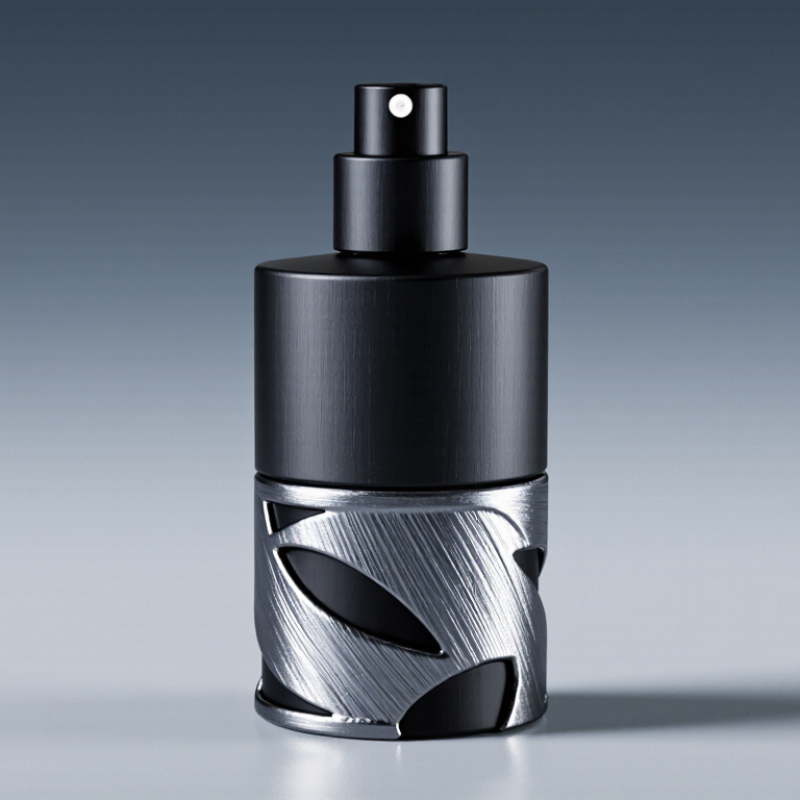
What Is an Aluminum Perfume Bottle?

Definition and Basic Structure of an Aluminum Perfume Bottle

An aluminum perfume bottle is a fragrance container formed mainly from lightweight aluminum. Its basic structure usually includes an aluminum body, inner coating, neck, pump, dip tube, actuator, and protective cap. The body provides shape and shields the liquid from light. The inner coating separates the fragrance from bare metal.

The neck holds the pump or crimped closure firmly. Inside, a small dip tube reaches near the bottle’s base. Pressing the actuator moves the liquid through the pump and creates a fine spray. The cap protects the actuator from dust and accidental pressing. Some bottles use threaded closures, but crimped systems often offer stronger sealing.

Material selection requires testing. Fragrance oils, alcohol, coatings, and seals must remain compatible over time. Otherwise, corrosion, odor changes, or leakage may appear. That detail is easy to overlook. In practical packaging work, drop tests and accelerated aging tests reveal weaknesses before filling.

The International Aluminium Institute reports that recycling aluminum can save up to 95% of the energy required for primary production. Its 2024 industry data also highlights aluminum’s established recycling value. The United Nations Environment Programme’s Global Resources Outlook 2024 reports that global resource extraction has tripled since 1970. These figures support lightweight, recyclable design, but they do not make every bottle automatically sustainable. Coatings, pumps, mixed materials, and recycling access still matter.

How Aluminum Perfume Bottles Are Manufactured

What Is an Aluminum Perfume Bottle?

How Aluminum Perfume Bottles Are Manufactured

An aluminum perfume bottle usually starts as a thin, clean sheet of aluminum alloy. The sheet is cut into precise discs before forming begins. A deep-drawing press pushes each disc into a shaped steel tool. Pressure stretches the metal into a seamless container. This method reduces visible joints and supports consistent wall thickness.

The formed bottle is trimmed, washed, and dried. Any oil or metal dust must be removed carefully. A protective internal coating may be applied to limit contact between the fragrance and aluminum. The coating needs even coverage, especially around the base and shoulder. Small gaps can affect performance. The outer surface may receive polishing, coloring, printing, or a brushed texture. Neck forming then creates the opening for the pump and closure.

Quality checks happen throughout production. Workers and sensors inspect dimensions, surface marks, coating coverage, and leakage. Sample bottles may hold fragrance under controlled conditions to check odor, discoloration, and material compatibility. Aluminum is lightweight and recyclable, but manufacturing still uses energy and creates rejected pieces. No process is flawless. A tiny dent may be cosmetic, while a damaged coating requires rejection. In practice, careful tooling maintenance often matters as much as the metal itself. Even attractive finishes can fail if cleaning or curing is rushed.

Key Properties of Aluminum in Fragrance Packaging

What Is an Aluminum Perfume Bottle?

Key Properties of Aluminum in Fragrance Packaging

Aluminum perfume bottles combine low weight with strong structural protection. A thick-walled bottle feels substantial, yet it weighs less than comparable glass packaging. This difference matters during filling, shipping, and daily handling. The metal also blocks light almost completely. That barrier helps protect fragrance ingredients from ultraviolet exposure and gradual color changes.

Corrosion resistance is another practical advantage. However, aluminum should not touch every fragrance formula directly. Alcohol, water, acids, and certain oils may interact with the metal. A carefully selected internal coating is often necessary. Compatibility testing should include heat, storage time, leakage, odor transfer, and repeated spraying. Small failures can appear after months, not days. That is easy to overlook.

The International Aluminium Institute reports that recycling aluminum requires about 5% of the energy used for primary aluminum production. Its Aluminium Sector Greenhouse Gas Pathways to 2050 report also emphasizes the importance of recycled content and renewable electricity. These figures support aluminum’s circularity potential, but they do not guarantee sustainable packaging. Recycling depends on collection systems, coating removal, closures, and local processing capacity. The packaging must be designed for those realities. A recyclable material is not automatically a recycled product. That distinction deserves more attention.

What Is an Aluminum Perfume Bottle?

Key physical properties of aluminum used in fragrance packaging

Aluminum combines low density with high thermal conductivity and a melting point of approximately 660.3°C. Its opacity helps protect fragrance from light exposure, while its strength and formability support lightweight, durable bottle designs. Values shown are typical for commercially pure aluminum; alloy composition and temper can change performance.

Common Designs, Uses, and Refillable Features

An aluminum perfume bottle is a lightweight container made from formed or extruded aluminum. Its opaque wall helps reduce light exposure, which can support fragrance stability. The surface may be brushed, anodized, painted, or left visibly metallic. Common designs include slim travel sprays, rounded atomizers, and screw-neck bottles with replaceable pumps.

Its practical value appears in daily use. Aluminum resists breakage better than glass, especially inside a handbag or luggage. A tight gasket and compatible inner coating remain essential. Alcohol-based fragrance can react with unsuitable materials. Professional packaging tests should check leakage, corrosion, spray performance, and long-term formula compatibility.

Refillable designs usually separate the outer shell from an inner fragrance cartridge. Users can replace the cartridge while keeping the decorative bottle. Some models use a screw system; others use a sealed insert. The International Aluminium Institute reports that recycling aluminum can save about 95% of the energy used for primary production. That supports aluminum’s circularity advantage, but only when collection systems work. McKinsey’s 2023 packaging research also found that many consumers value recyclable and reusable packaging, though willingness to pay varies by market. Refillable does not automatically mean greener. Extra parts, transport, and cleaning can reduce the benefit. A refill that leaks is not a sustainable success. The design still needs improvement.

What Is an Aluminum Perfume Bottle? - Common Designs, Uses, and Refillable Features
Data Dimension Common Information Typical Options or Range Practical Benefit Important Consideration
Definition An aluminum perfume bottle is a fragrance container made primarily from lightweight aluminum, usually with an internal component that keeps the fragrance separated from the metal. Aluminum outer shell, inner glass or compatible plastic reservoir, spray pump, and protective cap. Provides a lightweight and durable package for liquid fragrance. The internal lining or reservoir should be compatible with alcohol-based fragrance formulas.
Common Capacity Capacity depends on the intended use, filling format, and product category. Travel sizes: approximately 5–15 mL; personal-use sizes: approximately 30–100 mL; larger formats: over 100 mL. Small sizes are convenient for handbags and travel, while larger sizes reduce the need for frequent refilling. Actual fill volume should leave enough headspace for safe closure and dispensing.
Bottle Shape Aluminum bottles can be formed into compact cylindrical, rectangular, oval, or specially shaped designs. Common forms include slim cylinders, rounded rectangles, pocket-size tubes, and low-profile atomizers. Shape affects portability, storage efficiency, grip, and visual appearance. Highly complex shapes may increase manufacturing difficulty and may be less stable when placed upright.
Surface Finish The exterior can be treated to improve appearance, grip, and resistance to surface wear. Brushed, matte, polished, anodized, painted, printed, or textured finishes. Finishes provide different visual effects and can help reduce the appearance of minor fingerprints or scratches. Coatings may wear over time if exposed to abrasion, solvents, or repeated contact with hard surfaces.
Dispensing System Most aluminum perfume bottles use a fine-mist spray pump, while some compact formats use a roll-on or splash application. Crimped spray pump, screw-fit spray pump, refillable atomizer, roll-on applicator, or removable cap design. Fine-mist sprayers distribute fragrance evenly and help control the amount applied. The pump, dip tube, gasket, and valve must resist fragrance ingredients and maintain a reliable seal.
Refillable Design A refillable bottle is designed to be opened or connected to a refill container without replacing the complete outer package. Top-fill, bottom-fill, screw-neck, removable-cartridge, or refill-through-adapter systems. Can reduce packaging waste and allow the outer bottle to be reused multiple times. Not every aluminum bottle is refillable; a permanently crimped or sealed construction may be intended for one-time use.
Leak Protection Leak resistance depends on the closure, valve, gasket, seams, and quality of assembly. Screw caps, snap caps, locking spray buttons, threaded collars, and elastomeric seals. Helps protect luggage, clothing, and personal items during transport. A bottle should be tested in different positions and conditions before being carried in a travel bag.
Light and Impact Protection Aluminum blocks light more effectively than clear packaging and is less likely to shatter than glass. Opaque outer body with a protective cap or reinforced wall structure. Reduces exposure to light and provides better resistance to accidental drops than ordinary glass bottles. The fragrance still needs suitable storage away from excessive heat, direct sunlight, and strong temperature changes.
Portability The low density of aluminum makes it suitable for compact fragrance containers and travel atomizers. Pocket atomizers, handbag bottles, toiletry-kit containers, and small refillable spray formats. Offers a lighter alternative to many glass formats and is easy to carry for daily touch-ups. Air-travel rules may limit the amount of liquid carried in hand luggage, regardless of the bottle material.
Typical Uses Aluminum perfume bottles are used for personal fragrance, travel decants, sample formats, event favors, and reusable fragrance containers. Daily perfume, eau de toilette, body mist, solid-fragrance accessories, and small-batch fragrance packaging. Supports both everyday use and portable fragrance applications. Compatibility should be checked before filling products containing high levels of essential oils or unusual solvents.
Cleaning and Maintenance Reusable bottles should be emptied and cleaned according to the manufacturer’s instructions before changing fragrance formulas. Use a compatible cleaning method, allow all components to dry completely, and inspect seals before refilling. Helps minimize fragrance mixing, contamination, and changes in scent profile. Water or unsuitable cleaners trapped inside the pump or reservoir can dilute the fragrance or affect dispensing.
End-of-Life Potential Aluminum is widely recyclable when separated from incompatible materials and accepted by local recycling systems. Recyclable metal body, reusable outer shell, or mixed-material construction requiring component separation. Recycling or reuse can extend the useful life of the packaging and reduce material waste. Spray pumps, liners, coatings, and mixed-material parts may need to be removed or processed separately.
Note: Capacity, refillability, closure type, and material compatibility vary by bottle construction. “Typical” ranges describe common market formats rather than fixed industry standards.

Advantages and Limitations Compared with Other Bottle Materials

What Is an Aluminum Perfume Bottle?

An aluminum perfume bottle uses lightweight metal to protect and dispense fragrance. In practical handling, it feels cool, firm, and less fragile than glass. A filled bottle can survive a short fall from a bathroom shelf with less risk of shattering. This matters during travel, retail shipping, and daily use. Aluminum also blocks light effectively, which may help protect fragrance ingredients from gradual light exposure.

Compared with glass, aluminum weighs less and resists breakage better. Its surface can support precise shaping, textured finishes, and durable printed details. However, aluminum can dent, scratch, or show fingerprints. The metal may also affect the liquid if the inner coating is poorly selected or damaged. Reliable manufacturers should test the lining, valve, seals, and fragrance compatibility over time. Small failures matter. A leaking pump can ruin a handbag.

Plastic often costs less and offers excellent impact resistance. Yet some users associate it with lower quality, and certain plastics may have weaker oxygen or solvent barriers. Aluminum can feel more premium, but it usually requires more processing than basic plastic. Its environmental advantage is not automatic. Recycling depends on local systems, coatings, mixed components, and collection rates. Glass remains highly inert and visually elegant, although it is heavier and easier to break. I would not call aluminum universally better. Its value depends on coating quality, refill design, transport needs, and honest material testing.

Find Mitten in Michigan

Request Mitten Near You

Have a favorite dispensary that doesn't carry Mitten Extracts yet? Let us know, and we'll work to make sure our premium products are available where you shop.