China Top Beta Arbutin Powder Suppliers for Global Buyers
The global demand for brightening skincare continues to expand, creating new opportunities for reliable Beta Arbutin Powder suppliers in China. Grand View Research valued the global skincare products market at approximately USD 155.7 billion in 2023. Its report also projects steady growth through 2030. This wider market trend supports stronger demand for tested cosmetic ingredients.
But demand alone does not prove quality.
Professional buyers need more than a competitive quotation. They should examine HPLC purity, residual solvents, heavy metals, microbiological limits, and batch consistency. A dependable supplier should provide a current Certificate of Analysis, Safety Data Sheet, specification sheet, and traceable production records. ISO 9001 or ISO 22716 systems can offer additional confidence, although certification does not replace independent verification.
Cosmetics Europe reported that European cosmetics and personal care sales reached about €88 billion at retail prices in 2023. Such a regulated market raises expectations for documentation and product safety. Suppliers serving global buyers must therefore understand ingredient specifications, packaging controls, and destination-market requirements.
China remains an important manufacturing base for cosmetic raw materials. However, supplier quality varies. Some factories present polished websites but limited technical evidence. That gap deserves attention. A practical evaluation should include sample testing, plant communication, packaging photographs, and clear lead-time commitments.
This guide reviews leading China-based Beta Arbutin Powder suppliers through a buyer-focused lens. It considers manufacturing experience, testing capability, export support, documentation, and consistency across batches. No supplier is perfect. Careful verification remains essential before signing a long-term contract.
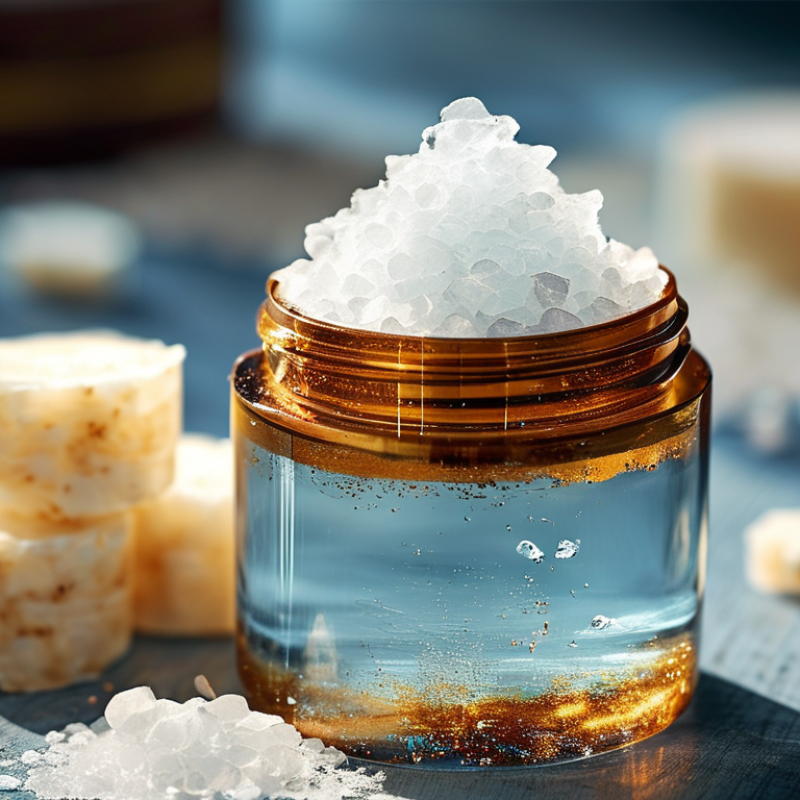
What Is Beta Arbutin Powder and How Does It Work?
Beta arbutin powder is a water-soluble cosmetic ingredient used in products targeting uneven skin tone. It is a glycoside related to hydroquinone, but its behavior is gentler and more controlled in cosmetic formulas. After application, beta arbutin can reduce tyrosinase activity, an enzyme involved in melanin production. Less enzyme activity may mean less visible pigmentation over time.
The process is gradual. It does not erase dark spots overnight. Skin condition, sun exposure, formula pH, and storage temperature all affect performance. A stable formula usually needs suitable packaging and protection from excessive heat and moisture. Daily broad-spectrum sunscreen remains essential. Without it, new pigmentation may develop while the product is being used.
For global buyers, quality begins with measurable documentation. Request an HPLC assay, moisture data, microbial limits, heavy-metal results, residual-solvent information, and batch traceability from powder suppliers. Particle size and color also matter because they influence dispersion and product appearance. A clear, nearly white powder is often expected, but appearance alone cannot confirm purity. It is easy to overstate beta arbutin’s results. A responsible supplier should provide realistic specifications, handling guidance, and safety data rather than promising dramatic whitening. Patch testing is still sensible, especially for sensitive skin. Formulators should also review local cosmetic requirements before commercial distribution.
| Data Category | Buyer-Focused Data Dimension | Typical or Reference Information | Why It Matters for Global Buyers |
|---|---|---|---|
| Identity | Chemical name | Beta-arbutin, also known as 4-hydroxyphenyl β-D-glucopyranoside | Confirms that the material is the beta isomer rather than alpha-arbutin or another brightening ingredient. |
| Identity | CAS Registry Number | 497-76-7 | A globally recognized identifier used in technical documents, customs records, safety data sheets, and quality specifications. |
| Molecular Profile | Molecular formula | C12H16O7 | Useful for verifying the declared chemical identity and reviewing analytical documentation. |
| Molecular Profile | Relative molecular mass | 272.25 g/mol | Supports formulation calculations, laboratory testing, and comparison with the product specification. |
| Physical Form | Appearance | White to off-white crystalline powder | Color and physical form can provide an initial incoming-goods check, although identity must be confirmed by laboratory testing. |
| Solubility | Water compatibility | Soluble in water; actual solubility depends on temperature, purity, and formulation conditions | Important for aqueous serums, lotions, masks, and other water-based cosmetic products. |
| Biological Origin | Natural occurrence | A glycoside of hydroquinone found in several plants, including bearberry, pear, and cranberry | The botanical source and manufacturing route should be verified when natural-origin or vegetarian claims are required. |
| Mechanism | Primary skin-brightening action | Helps reduce melanin formation by inhibiting tyrosinase activity in the melanin-production pathway | Explains why beta-arbutin is commonly used in products designed to improve the appearance of uneven skin tone and dark spots. |
| Mechanism | Relationship to hydroquinone | A glucose-linked derivative of hydroquinone that is generally considered less immediately reactive than free hydroquinone | The finished formulation still requires safety assessment, stability testing, and compliance review for the target market. |
| Typical Specification | Assay by HPLC | Common commercial specification: not less than 98.0%; confirm the exact limit on the supplier’s current specification sheet | Assay alone does not prove overall quality; buyers should also review impurities, moisture, residue on ignition, and microbiological results where applicable. |
| Quality Control | Recommended identity tests | HPLC identification and assay, infrared spectroscopy, and comparison with an approved reference standard | Using more than one identity approach reduces the risk of substitution or mislabeling. |
| Quality Control | Key batch-release documents | Certificate of Analysis, Safety Data Sheet, product specification, batch number, manufacturing date, and retest or expiry information | These documents support traceability, import clearance, supplier qualification, and finished-product development. |
| Contaminant Control | Testing commonly requested by buyers | Heavy metals, residual solvents, microbial limits, pesticides where relevant, and elemental impurity testing | Testing requirements vary according to the destination country, product category, and intended application. |
| Manufacturing Review | Facility and quality-system evidence | GMP-based procedures, batch traceability, change-control records, deviation management, and documented quality testing | A quality-system review is more informative than relying only on a marketing description or a single test report. |
| Packaging | Common shipment format | Sealed inner liner inside a fiber drum, carton, or equivalent protective container; actual pack size varies by supplier | Packaging should protect the powder from moisture, contamination, and excessive heat during international transport. |
| Storage | Recommended handling | Store tightly closed in a cool, dry place away from direct light and incompatible materials; follow the current SDS | Correct storage helps preserve appearance, assay, and formulation performance during the stated shelf life. |
| Supply Evaluation | Documents to request before purchase | Recent batch COA, SDS, technical data sheet, sample availability, product specification, allergen statement, and regulatory statement | Requesting documents before placing a bulk order helps identify gaps in compliance and technical support. |
| Commercial Review | Sample and pilot-order assessment | Evaluate sample appearance, dissolution behavior, odor, assay, impurity profile, packaging integrity, and batch consistency | A laboratory-approved sample should be compared with the bulk shipment before full-scale procurement. |
| Regulatory Review | Market authorization considerations | Check cosmetic-ingredient requirements, permitted use levels, labeling rules, safety assessment obligations, and import regulations in each destination market | Regulatory status and permitted concentration can differ by country and by the type of finished product. |
| Formulation | Compatibility considerations | Assess pH, heat exposure, light exposure, water activity, preservative system, packaging, and interaction with other active ingredients | A stable raw material can still perform poorly if the finished formulation is not properly designed and tested. |