10 Tips for Choosing the Best Motorized Pergola
Choosing a Motorized Pergola is less about showroom appearance and more about daily performance. A smooth roof should open quietly, shade a seating area, and withstand changing weather. Product photos rarely reveal drainage details, motor noise, or maintenance access. Those details matter. Before comparing models, measure the patio, track the sun’s path, and observe where rainwater naturally flows. A pergola that looks perfect online may feel cramped beside a grill or block a window.
These ten tips focus on decisions homeowners can verify, rather than promises shaped by marketing language. Check the frame material, coating quality, blade movement, control options, and manual operation. Ask how the motor performs after repeated cycles and whether replacement parts remain available. Experienced installers can explain wind exposure, anchoring, and foundation requirements. Manufacturer documentation should clarify load limits and warranty coverage. Independent reviews can help, but they are not always consistent. Treat them as clues, not proof.
Comfort also depends on details beyond the roof. Integrated lighting, rain sensors, privacy screens, and safe electrical installation can change the experience. Still, more features do not automatically mean better value. Cleaning access is easy to underestimate, yet it can become an irritating chore. Leave room for honest reconsideration. The best choice balances climate, budget, appearance, controls, and long-term service. Use this guide to compare carefully, question vague claims, and choose a system that performs reliably in real outdoor conditions.
Understanding Motorized Pergola Types and Operating Systems
10 Tips for Choosing the Best Motorized Pergola
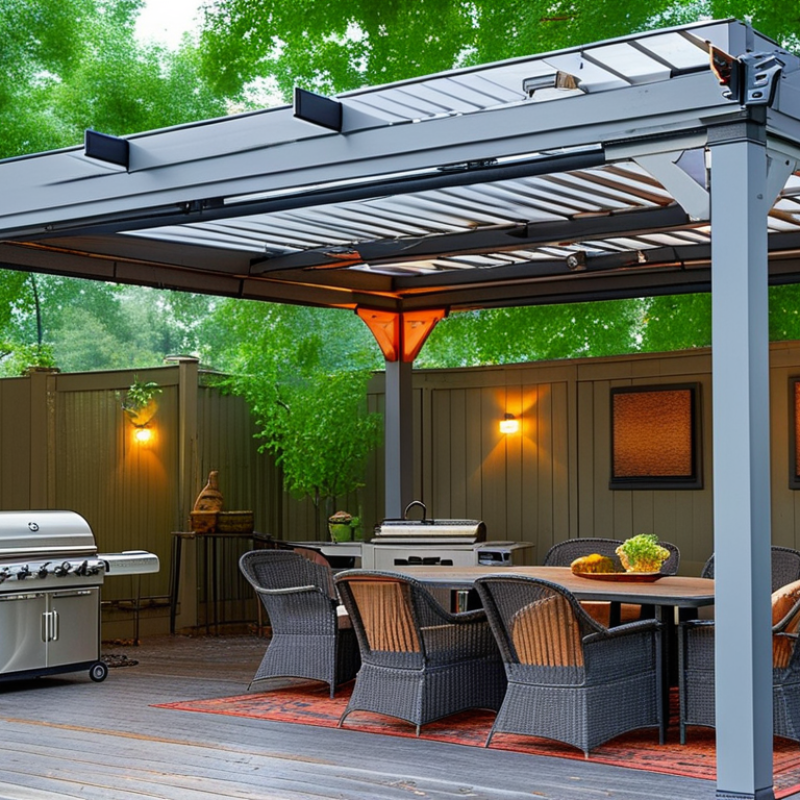
Choose the roof type before choosing the motor. Louvered pergolas rotate aluminum slats for sun, airflow, and rain control. Retractable fabric systems create softer shade but need careful tensioning and drainage. Adjustable-panel designs offer stronger weather protection, although they usually require heavier actuators. Count the opening size, roof weight, and local wind exposure. Do not judge strength by appearance.
The operating system deserves equal attention. Look for quiet tubular motors, suitable torque, and a manual override. A remote control is simple. App control adds scheduling and status checks. Rain, sun, and wind sensors can close or open the roof automatically. However, sensors are not magic. Poor placement can trigger unwanted movement. Ask whether the controller supports emergency stopping and power-loss recovery. Check the motor’s weather rating, duty cycle, wiring access, and service availability.
The U.S. Department of Energy reports that exterior shading can block up to 77% of summer solar heat gain on west-facing windows. That finding supports shade planning, but it does not guarantee equal pergola performance. Orientation, roof spacing, glass, and nearby walls change the result. A practical test is to stand beneath the proposed roof at late afternoon. Notice glare, heat, and water paths. Ten careful checks beat one impressive specification. I would still request a written wind rating and drainage plan. Many buyers overlook those details. That is an expensive lesson.
10 Tips for Choosing the Best Motorized Pergola: Understanding Motorized Pergola Types and Operating Systems
| No. | Selection Tip | Motorized Pergola Type | Operating System | Best Use Case | Key Advantages | Important Considerations | Typical Performance Level |
|---|---|---|---|---|---|---|---|
| 1 | Match the roof movement to your weather and shade requirements. | Louvered Roof | Electric tubular motor with rotating aluminum slats | Adjustable sunlight, airflow, and rain protection | Roof angle can be adjusted; closed louvers can direct rainwater to integrated gutters. | Requires accurate installation, drainage planning, and periodic inspection of moving parts. | Highest versatility |
| 2 | Choose a retractable canopy when fabric flexibility is more important than a solid roof. | Retractable Fabric | Motorized roller or track system | Patios requiring variable shade and an open-sky option | Lightweight appearance, broad opening area, and convenient shade control. | Fabric must be selected for UV resistance and should normally be retracted during severe wind or heavy snow. | Flexible shade control |
| 3 | Consider a retractable screen if insects, glare, or low-angle sun are major concerns. | Screen-Integrated Pergola | Motorized vertical zip screen or side-track screen | Outdoor dining, evening seating, and partial privacy | Helps reduce insects, wind, and solar glare while preserving ventilation. | Screens are not a substitute for structural walls and may require cleaning to maintain visibility. | Strong comfort upgrade |
| 4 | Select the control method that fits how often and where you use the pergola. | Any Motorized Type | Wall switch, handheld remote, smartphone app, or home-automation integration | Homes requiring convenient daily operation | Remote and app controls allow adjustment without reaching the frame or roof mechanism. | Wireless systems depend on power, signal strength, software compatibility, and secure network settings. | Convenience depends on setup |
| 5 | Verify wind, rain, and snow requirements before comparing designs. | Louvered or Fixed-Frame | Motor controller with sensors and limit switches | Locations exposed to changing weather | Weather sensors can automate closure or adjustment when programmed correctly. | Sensor automation does not replace local weather judgment; heavy snow and extreme wind may require manual precautions. | Weather response varies by design |
| 6 | Prioritize quiet and reliable operation for bedrooms, restaurants, or frequent evening use. | Louvered or Retractable | Low-noise tubular motor with electronic limit control | Residential and hospitality spaces where noise matters | Controlled movement provides consistent opening and closing without manual effort. | Noise can increase if tracks, hinges, or louvers are misaligned or lack routine maintenance. | Quiet when properly maintained |
| 7 | Check available power before choosing a fully motorized configuration. | Electric Motorized System | Hardwired AC supply, low-voltage control, or rechargeable battery system | Permanent patios and areas with convenient electrical access | Hardwired systems support frequent operation and generally avoid battery recharging. | Electrical work should follow local codes and be performed by a qualified professional where required. | Best for frequent use |
| 8 | Evaluate the frame and roof materials for durability, upkeep, and climate suitability. | Aluminum-Framed Pergola | Motorized system with corrosion-resistant hardware | Humid, coastal, or low-maintenance outdoor areas | Aluminum is lightweight, does not rust like untreated steel, and can support durable powder-coated finishes. | Protective finishes can still be damaged by salt, abrasion, or harsh cleaning chemicals. | Low-maintenance option |
| 9 | Confirm drainage details rather than judging water resistance by the roof alone. | Guttered Louvered Roof | Motorized louvers with concealed gutters and downspouts | Outdoor areas needing improved rain management | Integrated channels can collect and direct water away from the seating area. | Gutters must remain clear, and the installation must provide correct slope and discharge points. | Strong rain-management potential |
| 10 | Compare warranty coverage, replacement parts, and service access before purchase. | Any Motorized Type | Modular motor, controller, sensor, and manual override system | Long-term ownership and easier maintenance | Replaceable components and a manual override can reduce downtime during power or control failures. | Confirm coverage for the frame, finish, motor, electronics, fabric, labor, and weather-related damage separately. | Best for lifecycle value |