How to Choose Sport Smart Glasses in 2026?
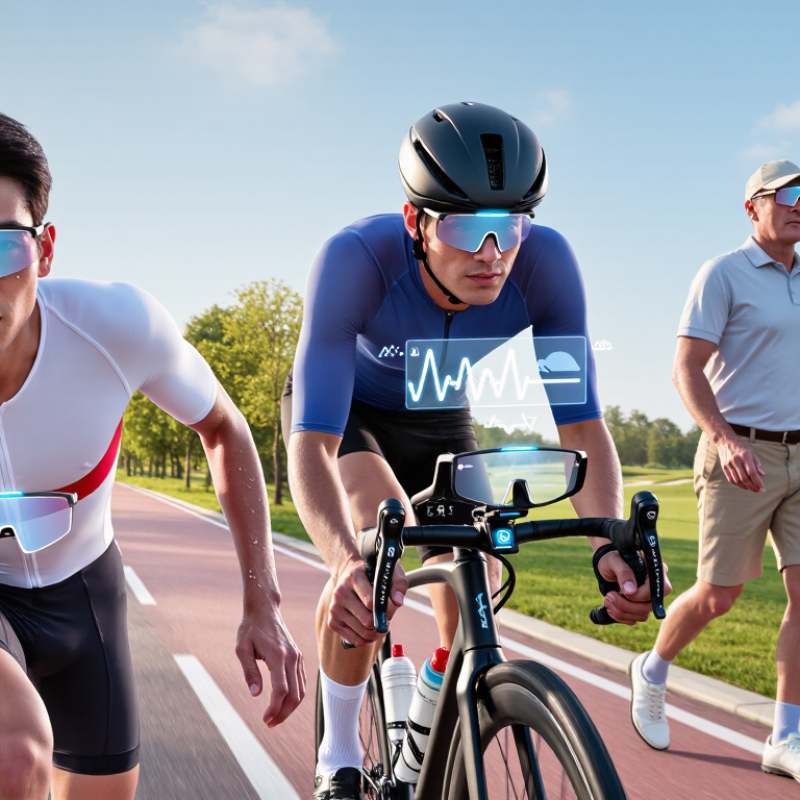
Choosing Sport Smart Glasses in 2026 requires more than comparing camera quality or futuristic designs. Athletes need useful information without losing focus, balance, or awareness. A cyclist may need navigation, speed, and hazard alerts. A runner may prefer heart-rate data, route guidance, and lightweight lenses. A golfer may value distance tools and wind information. Every sport creates different priorities.
Mark Zuckerberg, founder of Meta and a major augmented-reality industry leader, once said, “The metaverse is going to be the successor to the mobile internet.” His statement highlights a growing shift toward hands-free digital experiences. However, Sport Smart Glasses should support real performance rather than create unnecessary distractions. Bright sunlight, sweat, unstable connectivity, and limited battery life can quickly expose weak designs. Small details matter. A fogged lens matters.
This guide examines optical clarity, display safety, comfort, durability, battery performance, privacy controls, and software reliability. It also considers real training conditions, not only showroom demonstrations. Look for glasses that remain comfortable after an hour of movement. Test controls with wet hands. Check whether alerts remain readable during rapid activity. Some advertised features may sound impressive but offer little practical value. That is worth questioning. The perfect pair does not exist. A better choice depends on your sport, environment, fitness goals, and tolerance for technology. Good Sport Smart Glasses should feel helpful, dependable, and almost invisible when your attention belongs elsewhere.
Identify Your Sport, Metrics, and Required Smart-Glass Features
How to Choose Sport Smart Glasses in 2026?
Start with the sport, not the screen. Road cyclists may need turn-by-turn navigation, speed, cadence, and wind-resistant audio. Trail runners often value route guidance, elevation, heart-rate alerts, and a wide field of view. Swimmers need a different solution entirely; most smart glasses are not designed for prolonged water exposure. Check the protection rating carefully.
The 2025 ACSM Worldwide Survey ranked wearable technology as the leading fitness trend. That finding reflects a practical shift: athletes want measurable feedback during training, not decorative technology. Select glasses that connect reliably with your watch, phone, or cycling computer. Battery life should cover your longest session, with spare capacity for cold weather. Clear lenses, stable nose support, and physical controls matter when your hands are wet or gloved.
Use reputable testing data, not only advertising claims. The IEC 60529 standard helps interpret water and dust protection ratings, while independent sports-science studies can reveal whether optical heart-rate readings remain accurate during intervals. They may not. Sweat, skin movement, and poor fit can distort results. I would test the glasses during an ordinary training week before trusting them in competition. Privacy also deserves attention: disable unnecessary recording features and review where health data is stored.
How to Choose Sport Smart Glasses in 2026
Identify your sport, the metrics you need, and the smart-glass features that matter most.
How to read this chart: Each score uses a practical 1–5 selection scale, where 5 means the feature should be a high priority for that sport. Outdoor navigation and hands-free audio are especially important for cycling and hiking, while low weight, secure fit, and impact or weather protection are essential for high-movement activities. Use the scores as a planning guide and confirm the product’s actual specifications before buying.
Compare Battery Runtime, Charging Speed, and Display Brightness
Choosing sport smart glasses in 2026 starts with battery behavior, not feature lists. During a two-hour ride, navigation, audio, and a bright display can drain power unevenly. Check runtime claims under active use, rather than standby conditions. Eight hours suits casual training, while four to six hours may fit intensive display use. Cold mornings can reduce battery output. Sweat and dust also require well-sealed charging ports. Real testing beats optimistic packaging.
Charging speed affects training plans. A ten-minute top-up should provide meaningful use, not merely change the percentage. Compare the time from 10% to 80%, because the final charging stage often slows. Use a compatible charger and monitor heat during fast charging. Excessive warmth is a warning sign. I value quick recovery, although I may overestimate its importance when a spare charging case would solve the problem more simply.
Display brightness needs testing in real sunlight. A screen that looks sharp indoors may disappear against a pale road. Look for measured brightness, strong contrast, automatic adjustment, and a manual override. Maximum brightness is not always best; it can create glare and reduce runtime. I once chose a brighter setting for safety, then noticed eye fatigue after dusk. Sunglasses, cloud cover, and reflective surfaces can change the result, so test the glasses outdoors before trusting one impressive specification.
Check IP Ratings: IEC 60529 IP68 Means 1 m for 30 Minutes
How to Choose Sport Smart Glasses in 2026?
When choosing sport smart glasses, inspect the IP rating carefully. IP68 has two parts. The first 6 means complete protection against dust. The second 8 means protection during continuous water immersion under specified conditions.
Many product specifications describe IP68 as one meter of water for 30 minutes. Treat that figure as a testing limit, not an invitation to swim with the glasses. IEC 60529 allows manufacturers to state their own immersion depth and duration. Therefore, always read the detailed test condition.
Water pressure changes with movement. A dive, wave impact, or forceful spray may stress the seals more than still water. Sweat and rain are usually less demanding, but repeated exposure can still age rubber seals. Saltwater and chlorinated water deserve extra caution. Rinse the glasses with clean water and dry them completely.
Check the charging cover, microphone openings, and removable accessories. These areas often become weak points. Do not charge wet glasses. That mistake is easy to make.
IP68 does not confirm impact resistance, lens clarity, battery safety, or reliable operation after temperature changes. A model may survive a brief immersion yet fail after a drop. I would also question vague claims without test conditions or care instructions. A clear manual is a practical sign of responsible engineering, although it is not proof of perfect durability.
How to Choose Sport Smart Glasses in 2026? - Check IP Ratings: IEC 60529 IP68 Means 1 m for 30 Minutes
| Sport Situation | Recommended Minimum Rating | IEC 60529 Meaning | What It Helps With | Important Limitation | Selection Priority |
| Indoor training and everyday walking | IPX4 or higher | Protection against water splashes from any direction | Light sweat, small splashes, and changing indoor conditions | Not designed for water jets, immersion, or swimming | Comfort and fit |
| Running, cycling, and outdoor workouts | IPX5 or higher | Protection against water jets from any direction | Rain, heavy perspiration, and water from outdoor cleaning | The rating does not confirm protection against immersion | Stable fit and visibility |
| Trail running and dusty environments | IP6X plus IPX5 or higher | IP6X is dust-tight; the second code describes water protection | Fine dust, trail debris, rain, and water jets | Dust protection does not indicate impact resistance or lens durability | Dust sealing |
| Kayaking, paddle sports, and wet-weather training | IPX7 or higher | Temporary immersion in water up to 1 m for up to 30 minutes under the test conditions | Accidental drops into shallow water and brief immersion | IPX7 alone does not certify protection against high-pressure water jets | Water sealing |
| Frequent heavy rain and mixed outdoor use | IPX6 or IPX7, depending on exposure | IPX6 protects against powerful water jets; IPX7 protects against temporary immersion | Heavy rain, spray, and accidental short-term submersion | One rating does not automatically replace the other; check the complete IP code | Match the exposure |
| Sports requiring the highest listed water protection | IP68, if the specified conditions fit | IP6X dust-tight plus IPX8 immersion protection under manufacturer-specified conditions | Dust and immersion beyond the IPX7 test level when the stated conditions allow it | IP68 does not universally mean 1 m for 30 minutes; those conditions are commonly associated with IPX7. IPX8 depth and duration must be stated separately | Read the test details |
| Any sport with frequent sweat exposure | IPX4 or higher | The IP code measures water ingress under defined laboratory conditions | Helps reduce the risk from sweat and ordinary moisture | Salt, chemicals, sunscreen, and long-term exposure may affect materials; follow cleaning instructions | Maintenance |
How to read an IP code: The first digit indicates protection against solid particles, while the second digit indicates protection against water. In an IP68 rating, “6” means dust-tight and “8” means protection against continuous immersion under conditions specified by the manufacturer. Always verify the stated immersion depth and duration before choosing sport smart glasses.
Evaluate Bluetooth 5.3, GNSS Accuracy, Privacy, and Total Cost
When choosing sport smart glasses in 2026, Bluetooth 5.3 should be more than a specification. Test connection stability beside busy roads, gym equipment, and crowded events. Bluetooth 5.3 can reduce dropouts and improve power efficiency, but it cannot fix a poorly designed antenna. Music should remain clear while your phone stays in a waist pocket. That small test matters.
GNSS accuracy deserves outdoor testing. Run beneath trees, beside tall buildings, and on winding trails. Compare the glasses’ route with a trusted sports watch. A good signal may still drift by several metres. Check whether the device supports multiple satellite systems and records data without constant phone access. I tend to overvalue advertised accuracy. Real environments are less generous.
Tips: Review every app permission before pairing. Disable location history, voice recording, or cloud uploads when unnecessary. Read the privacy policy for storage, deletion, and third-party sharing. Also calculate the total cost: glasses, charging accessories, protective cases, prescription lenses, repairs, and paid navigation services. Battery replacement is often forgotten. Comfort is another cost; heavy frames can cause pressure after two hours. Try them with a helmet, sweat, and bright sunlight. The best choice may not be the most advanced model.